Lesson 5 of 6 · 9 min
Test the idea in a week, before you build
The cheapest ways to test your idea in seven days: talk to ten people, put up a simple page, take a waitlist or pre-sale, and post where your audience already hangs out.
Building is the expensive way to find out if anyone wants your idea. Talking, a simple page, and asking for a small commitment are the cheap ways. Here is how to run a real test in one week, before you write any code.
Every founder in this course tested demand before building the real product. One put up a landing page with a fake demo months before writing code. Another sold fifty licences of a tool that did not exist yet. A third knocked on doors with nothing but a pitch. The pattern is simple: collect commitment, not compliments. People saying "great idea" costs them nothing. People joining a waitlist, booking a call, or paying a deposit are telling you the truth.
14 days
Days to first version
Sync2sheets
Source: How I Built It: $9K/Month Micro-SaaS$10K/mo
Reported monthly revenue
Setter AI
Source: How We Built a $10K/mo SaaS$30K/mo
Reported monthly revenue
Four cheap tests, cheapest first
Step 1: Talk to ten people
Cost: ₹0Find ten people in your target market and ask about the problem, not your product. Do not reveal why you are asking, so you get honest reactions instead of encouragement.
Step 2: Post where they hang out
Cost: ₹0Share a short screen recording or a clear description of the idea in the community where your audience already discusses the problem. Watch who comments and who signs up.
Step 3: Put up a simple page
Cost: a weekendMake a one-page site that explains the product as if it exists, with a waitlist or a booked call as the only button. A fake demo video is fine.
Step 4: Pre-sell or take a deposit
Cost: courageOffer a limited number of early licences at a low price, with a clear delivery date and a full refund promise. Money is the strongest signal there is.
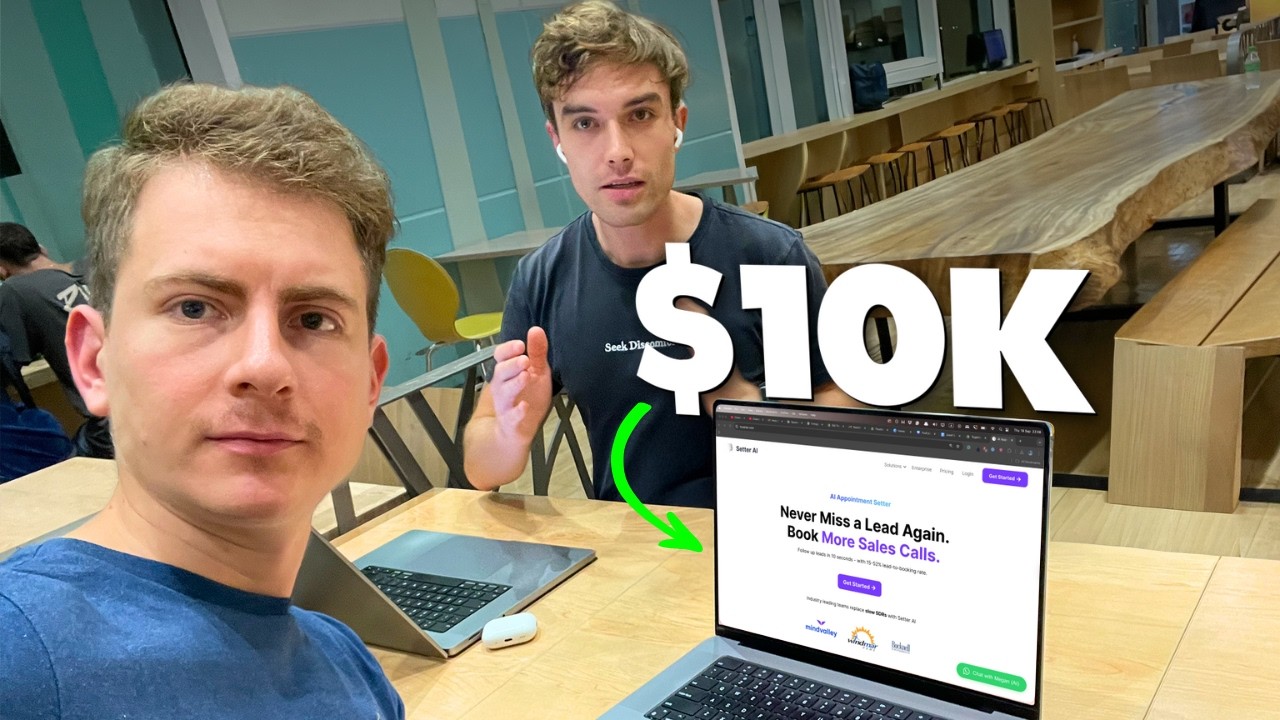
Case study
A fake demo and a calendar link, months before any code
What they did first
- Set up a landing page on a domain he already owned, months before starting the business
- Made a fake AI caller demo video so visitors could see the idea in action
- Used a calendar booking link as the only call to action, then asked callers what they actually needed
Take this with you
The page did not sell a product. It started real conversations with real buyers, which told him whether the idea was worth building.
“I would talk to five to 10 people in the in your target market. Ask them about the problem you're trying to solve, but never tell them why you're asking.”

Case study
Ten committed hosts before a single line of code
What they did first
- Set a strict rule: ten confirmed event hosts must agree to use the product before any coding started
- Asked everyone in his personal circle with an event coming up, and got four yeses
- Messaged hundreds of strangers found through wedding and birthday hashtags on Instagram
Take this with you
He did not ask "do you like this idea?" He asked people to commit their own event to it. That is a test with a pass mark.
Weak signals
- Friends saying they love the idea
- Likes and upvotes on a post
- People saying they would probably pay
- Encouraging comments with no signup
Strong signals
- A stranger joins your waitlist
- Someone books a call to hear more
- Ten people commit to using it
- Someone pays a deposit or pre-order
Your seven-day test plan
Step 1: Day 1: Write the promise
2 hoursOne sentence: who it is for, what problem it removes. Write three questions about the problem that never mention your product.
Step 2: Day 2: Find your ten
2 hoursList ten real people in your target market. Start with people you know, then find strangers through hashtags, groups, or subreddits where the problem is discussed.
Step 3: Day 3: Have the conversations
3 hoursMessage or call your ten. Ask about the problem, listen, and note exact words they use. Do not pitch.
Step 4: Day 4: Build the simple page
1 eveningOne page: the promise, a rough mock-up or short demo video, and one button — join the waitlist or book a call. Do not spend more than two to three days on this; one evening is enough.
Step 5: Day 5: Post where they live
2 hoursShare the page in the communities from Day 2. Post a screen recording or a clear description. Reply to every comment and DM every interested person.
Step 6: Day 6: Ask for commitment
2 hoursOffer the most interested people an early deal: a limited number of low-price licences or a small deposit, with a delivery date and a full refund promise.
Step 7: Day 7: Count and decide
1 hourSet your pass mark in advance — for example ten waitlist signups, five booked calls, or three payments. Hit it, build. Miss it, change the idea or the audience and test again.
“Don't spend more than two tothree days with this. Just go on Figma or just use many of these AI toolsthat's out there.”
Your turn
45 minRun Day 1 and Day 2 tonight
Write your one-sentence promise: who it is for and what problem it removes. Then write three questions about that problem that never mention your product. Finally, list ten real people you could ask — three you already know, and seven you could reach through a group, hashtag, or community where this problem is discussed. Send the questions to the first three people before you sleep.
What you'll have at the end
One promise sentence, three problem questions, and a list of ten names with three messages sent
Key takeaways
- Test commitment, not compliments: emails, calls, and payments are the only signals that count.
- Talk to ten people about their problem without revealing why you are asking.
- A simple page with a rough demo and one button can be built in an evening.
- Pre-selling with a refund promise is the strongest test — money never lies.
- Set your pass mark before the week starts, then let the numbers decide.
Where this comes from

How I Built It: $30K/month Micro-SaaS (Subscribr Breakdown)
Gil Hildebrand · Subscribr
Watch on SuperBuilder


From Zero to $42K/Month in 90 Days with AI
CJ Zafir (Sajila Mazafir, known on X as CJZ) · CodeGuide
Watch on SuperBuilderFrom Idea to $20K/Month App in 83 Days: The Validation Playbook
Brian Shin · Once
Watch on SuperBuilder
Builder Copilot
Knows this lesson · Test the idea in a week, before you build
Hi! I've read the whole Test the idea in a week, before you build lesson.
Ask how it applies to you: your budget, skills, city or idea. I'll point you to the parts of the lesson that matter.
Try asking
Your chats are saved, so Copilot remembers what you tell it.